# Quick Online Embroidery Digitizing vs Standard Turnaround: Which Is Right for You?
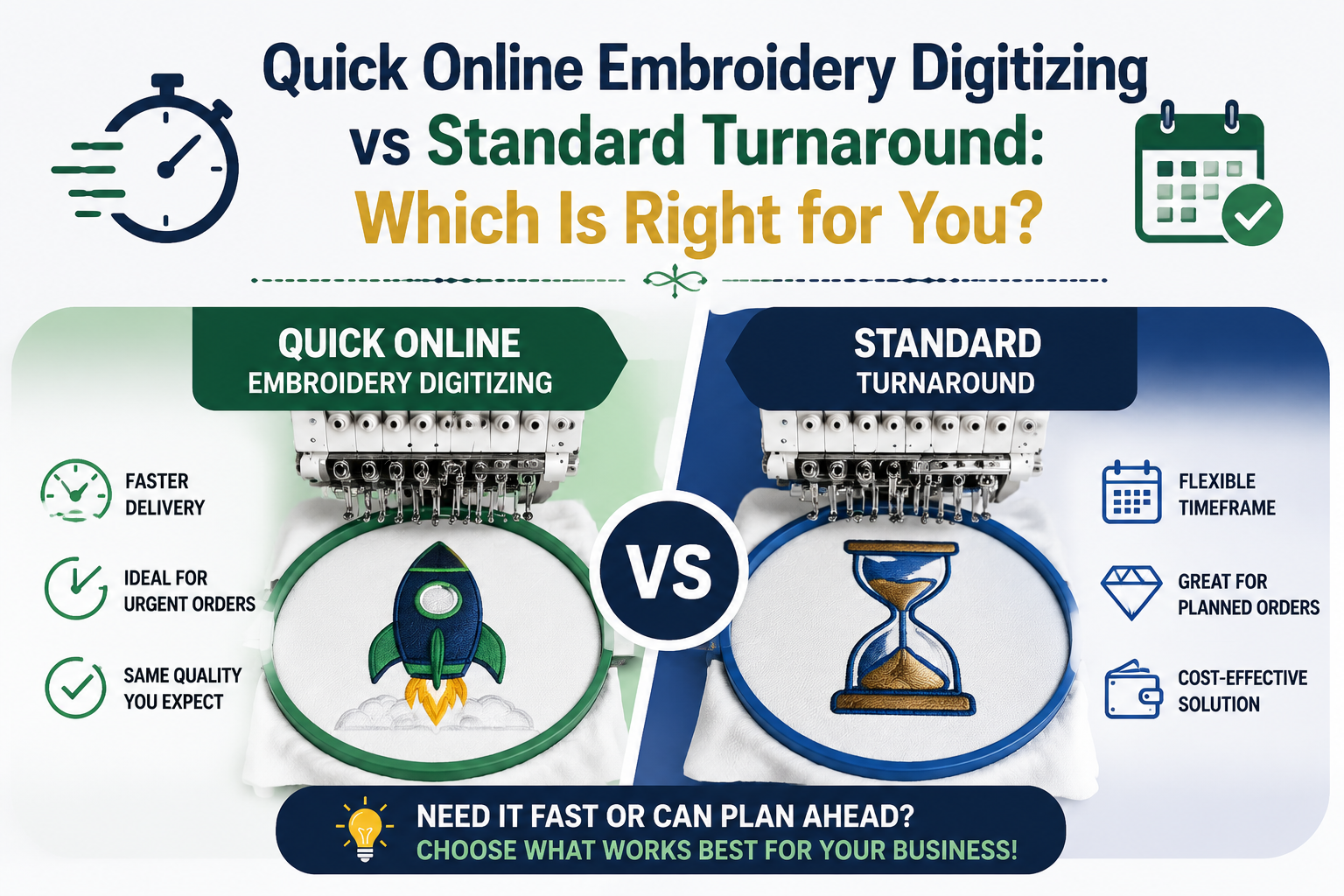
Embroidery businesses handle projects with different production schedules. Some orders require embroidery files within a few hours, while others allow enough time for testing, revisions, and customer approval before production begins. Choosing between **[quick online embroidery digitizing](https://idigitize.com/)** and a standard turnaround service depends on your deadline, artwork complexity, production workflow, and budget.
Both services can produce high-quality embroidery files when handled by experienced digitizers. The primary difference is the delivery schedule. Understanding how each option fits your production process helps you avoid unnecessary rush charges while ensuring your embroidery projects remain on schedule.
## **What Is Quick Online Embroidery Digitizing?**
Quick online embroidery digitizing is a priority service that prepares embroidery machine files within a shorter delivery timeframe than a standard order. Customers submit their artwork digitally, along with information such as embroidery size, fabric type, machine format, and required delivery time. The completed file is then returned electronically so production can begin as soon as possible.
This service is commonly used by embroidery shops handling urgent customer requests, clothing brands preparing last-minute samples, uniform suppliers working with fixed deadlines, promotional product companies producing event merchandise, sports teams requiring embroidered apparel before competitions, and independent embroiderers managing unexpected orders.
The actual turnaround depends on the complexity of the design. A simple left-chest logo can usually be completed more quickly than a detailed jacket-back design, patch, appliqué, or 3D puff embroidery file.
Although delivery is faster, professional digitizing standards should remain unchanged. Every design still requires proper stitch selection, underlay, stitch density, pull compensation, sequencing, trims, pathing, and fabric-specific adjustments to produce reliable embroidery results.
## **What Is Standard Turnaround Embroidery Digitizing?**
Standard turnaround embroidery digitizing follows the provider's regular production schedule instead of receiving priority handling. Orders are completed within the company's normal workflow, making this option suitable for projects that do not require immediate production.
Businesses often choose standard turnaround for planned clothing collections, repeat customer orders, regular uniform production, promotional campaigns, product samples, multiple logo submissions, and designs that benefit from additional review before embroidery begins.
The quality of the embroidery file should remain consistent regardless of the selected turnaround. Standard service simply provides greater scheduling flexibility and may reduce costs when there is no urgent deadline.
## **The Main Difference Between Quick and Standard Turnaround**
The most obvious difference between the two services is delivery speed. Quick digitizing moves an order ahead in the production queue, while standard turnaround follows the provider's regular schedule.
However, the difference extends beyond delivery time. Turnaround speed can also influence pricing, communication, revision planning, and the amount of time available for sample testing before full production.
### **Quick Online Digitizing**
Quick digitizing is intended for time-sensitive embroidery projects. Orders usually receive priority handling, allowing embroidery businesses to begin production sooner. Depending on the provider, urgent requests may involve an additional service fee because they require adjustments to the normal production schedule.
### **Standard Turnaround**
Standard turnaround works well for planned projects with flexible deadlines. It allows sufficient time to receive the embroidery file, perform sample stitching, request adjustments if necessary, and begin production without unnecessary pressure.
The best choice depends on the complete production timeline rather than simply how quickly the embroidery file is needed.
## **When Quick Online Embroidery Digitizing Is the Better Choice**
Priority digitizing is valuable when every production hour matters. If embroidery cannot begin until the machine file is complete, faster delivery helps prevent delays throughout the production process.
### **Fixed Event Deadlines**
Corporate events, trade shows, sports tournaments, school activities, and promotional campaigns often have fixed schedules. Missing these dates may reduce the value of the finished products or make them unusable.
Receiving a professionally digitized embroidery file quickly allows more time for sample stitching, quality checks, and production before the delivery deadline.
### **Last-Minute Customer Orders**
Embroidery businesses frequently receive customers who need customized apparel within a very short timeframe. Declining every urgent request can result in lost business opportunities and reduced customer satisfaction.
Using a dependable quick online embroidery digitizing service allows businesses to manage suitable rush orders without placing excessive pressure on internal staff.
### **Limited In-House Digitizing Capacity**
Some businesses do not employ a full-time digitizer, while others experience periods when internal workloads become difficult to manage. Employee absences or seasonal demand can also affect production capacity.
Outsourcing urgent embroidery files helps maintain production without interrupting customer schedules.
### **Urgent File Corrections**
Occasionally, a test stitch reveals issues that require immediate attention. Borders may shift, lettering may lose clarity, or certain areas may create fabric puckering.
When production has already been scheduled, fast revisions or redigitizing can prevent larger delays and reduce wasted production time.
### **Customer Sample Approval**
Many clothing brands and uniform suppliers require embroidered samples before approving full production.
Fast digitizing provides additional time to stitch a sample, evaluate the embroidery quality, photograph the finished product, and obtain customer approval before manufacturing begins.
### **Seasonal Production Peaks**
Demand often increases before holidays, sports seasons, school openings, and corporate events. During these busy periods, internal digitizing teams may struggle to keep pace with incoming orders.
Quick online support helps embroidery businesses distribute urgent work while allowing their internal teams to remain focused on production and customer service.
## **When Standard Turnaround Is the Better Choice**
Not every embroidery order requires priority handling. Standard turnaround offers a practical solution for projects with flexible production schedules while helping businesses manage costs more effectively.
### **Projects Planned Well in Advance**
If embroidery production will not begin for several days or weeks, standard turnaround usually provides more than enough time. Paying additional fees for rush handling offers little benefit when the regular schedule comfortably meets production requirements.
### **Highly Detailed Artwork**
Complex artwork often contains small lettering, multiple outlines, detailed illustrations, numerous color changes, or intricate design elements that require careful stitch planning.
Providing adequate preparation time allows the digitizer to simplify details where necessary while maintaining the appearance of the original artwork in embroidery form.
### **Multiple Design Submissions**
Businesses that submit several logos, patches, garment versions, or name files often benefit from standard scheduling.
Processing multiple embroidery files requires additional preparation, organization, and quality checks that fit naturally within the provider's regular production workflow.
### **Fabric-Specific Versions**
The same logo may require different digitizing settings depending on the embroidery surface.
For example, a design prepared for a polo shirt may require adjustments before it can be embroidered successfully on a cap, towel, jacket, fleece garment, or stretch fabric.
Standard turnaround provides sufficient time to prepare multiple optimized versions for different products.
### **Cost Management**
Priority services often involve additional charges because they require immediate attention and adjustments to the production schedule.
When deadlines are flexible, choosing standard turnaround can help control project costs without affecting embroidery quality.
### **Additional Time for Testing**
Every new embroidery design should ideally be tested before large-scale production begins.
Standard turnaround provides enough time for sample stitching, quality evaluation, customer feedback, and revisions before the embroidery machine begins producing the full order.
This additional preparation helps reduce production problems and improves overall embroidery consistency.
## **Final Thoughts**
Choosing between **quick online embroidery digitizing** and a standard turnaround service depends on your production schedule, artwork complexity, and business priorities. Quick digitizing is the better option when you need to meet tight deadlines, complete urgent customer orders, or keep embroidery production moving without unnecessary delays. Standard turnaround is a practical choice for planned projects that allow enough time for sample testing, revisions, and quality checks before full production.
Regardless of the turnaround you choose, file quality should never be compromised. A professionally digitized embroidery file with proper stitch planning, balanced density, suitable underlay, and fabric-specific adjustments helps improve machine performance and produces consistent embroidery results.
Before placing an order, evaluate your timeline, embroidery requirements, and the level of support offered by the digitizing provider. Selecting the right service at the right time can reduce production issues, improve workflow efficiency, and help deliver high-quality embroidered products that meet customer expectations.